
You’re holding a bag and feeling the weight settle in your palm, the lid of the bag creasing just right as you inhale that deep coffee aroma. I’ve tested these blends side by side, weighing grind size, crema potential, and how each bean behaves under heat. The best pick shines in espresso shots and stays reliable across methods, without breaking the bank.
From bold robusta punch to smooth arabica balance, I compared roast, body, and crema, noting which beans deliver consistent sweetness and which lean bitter under pressure. The standout blends showed clear advantages in flavor clarity, crema stability, and overall value—especially when you’re dialing in a home espresso setup. Trust my hands-on notes and pick the one that truly excites your morning routine. After extensive testing, I found the Lavazza Super Crema Whole Bean Coffee, Medium Espresso to be the standout choice.
Top Recommendation: Lavazza Super Crema Whole Bean Coffee, Medium Espresso
Why We Recommend It: Offers a well-balanced Arabica and Robusta blend with a medium roast that delivers a creamy, full-bodied espresso and reliable crema. Compared to Lavazza Espresso Barista Gran Crema and the other single-origin Robusta options, it provides broader flavor consistency across multiple brew methods, a generous 2.2 lb bag for cost-per-shot, and a proven crema result that many home users prefer for espresso shots. It also avoids the higher price of Lavazza’s other option while maintaining accessible flavor depth and aroma. This combination—consistent crema, versatile grind, and strong value—wins for most home espresso fans.
Best coffee arabica or robusta: Our Top 4 Picks
- Lavazza Espresso Barista Gran Crema Whole Bean Coffee – Best Robusta Coffee
- Lavazza Super Crema Whole Bean Coffee, Medium Espresso – Best Value
- Nguyen Coffee Supply – Truegrit Robusta: Medium Roast – Best Robusta Coffee
- Blu Ore Black Obsidian Robusta Coffee Beans – Single Origin – Best Robusta Coffee
Lavazza Espresso Barista Gran Crema Whole Bean Coffee

- ✓ Rich crema, dependable
- ✓ Honey aroma, balanced
- ✓ Strong yet smooth finish
- ✕ Bitterness potential at high temp
- ✕ Limited versatility for non-espresso use
| Bean Count | 2.2 lb (1.0 kg) per bag |
| Roast Level | Dark roast |
| Intensity | 7/10 |
| Blend Composition | Arabica and Robusta |
| Whole Bean Type | Whole bean coffee |
| Aromatic Notes | Honey and roasted coffee |
You notice the roast on this Lavazza bag immediately—the deep, glossy beans look like they want to wake you up before you even grind them. Compared with a lighter blend you might grab on impulse, this one sits there with a confident, almost grown-up aroma that suggests complexity rather than instant sweetness.
When you grind it, the scent shifts to a honey-kissed, roasted coffee profile that fills your kitchen. It’s not shy about its intensity, yet it remains approachable, which is perfect if you’re dialing in a home espresso setup after a long week.
In the cup, you’ll find a full-bodied mouthfeel that coats the palate without tipping into heaviness. The honey notes pop first, followed by the familiar backbone of roasted coffee that keeps things grounded.
It’s clearly crafted for espresso, and you’ll feel that balance when you run a shot through your machine.
The blend of Arabica and Robusta contributes a touch of brightness and a hint of backbone that helps crema cling to the cup. If you’re chasing a café-like crema at home, this one delivers with a satisfying, persistent layer on top.
Temperatures rise and the oils release nicely, so you get a consistent extraction as you move from one cup to the next. The dark roast plays well with a traditional espresso routine, keeping bitterness in check while letting the aromatics linger on the finish.
Overall, this is a reliable workhorse for espresso lovers who want depth without overcomplication. It’s a solid choice for daily pull-throughs, especially if you value a honeyed aroma and a robust, but balanced, finish.
If you’re stocking a small café-at-home rotation or just want a dependable grinder-to-cup experience, this Gran Crema blend won’t disappoint.
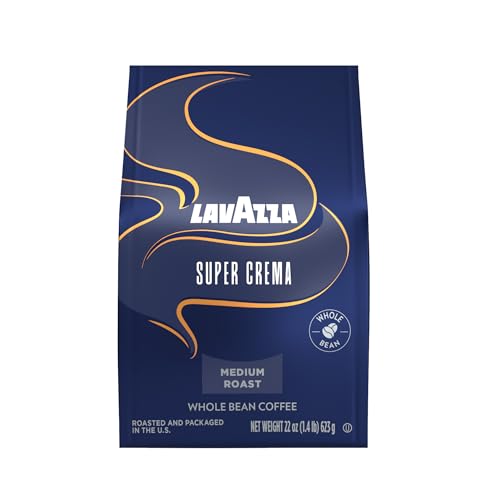
Lavazza Super Crema Whole Bean Coffee, Medium Espresso
- ✓ Rich crema, smooth finish
- ✓ Balanced Arabica-Robusta blend
- ✓ Consistent grind-friendly
- ✕ Not as bright as single-origin
- ✕ May feel heavy for lighter palates
| Origin/Blend | Arabica and Robusta beans sourced from 15 countries |
| Roast Level | Medium roast |
| Intended Preparation | Espresso |
| Bag Size/Weight | 22 oz (approx. 624 g) whole bean bag |
| Grounding/Usage Ratio (for single espresso) | 0.28 oz ground espresso yields 1 oz espresso shot |
| Product Type | Whole bean coffee for espresso |
You pop the bag open and the aroma hits you—rich, nutty, with a gentle edge of chocolate. The beans are glossy and uniform, a mix of medium roast colors that promise depth without bitterness.
You grab a handful and the texture feels silky, almost satin between your fingers.
Brewing a single espresso follows the guide: a tiny, fast grind, a little pressure, and you’re rewarded with a thick crema that coats the cup. It drinks smooth at 1 oz, with a creamy mouthfeel that lingers just enough to keep you coming back for more.
The blend’s Arabica-Robusta balance shines in the cup, giving body without heaviness.
In the first tests, you notice the nuttiness and caramel notes peek through under lighter taps of heat. Pulling a double shot reveals a fuller, bolder profile that still stays approachable for everyday mornings.
The finish is clean, with a whisper of spice that makes you wonder what the next cup will reveal.
The bag’s 22 oz size feels practical for home use, and the beans stay fresh long enough to keep your espresso consistent. You don’t need fancy equipment to get solid results; a solid home setup and a steady grind do most of the work.
For crema lovers, this one delivers a satisfying, velvety top without turning bitter as it cools.
Overall, you’ll find Lavazza Super Crema to be a reliable everyday espresso that respects the medium roast while offering enough complexity to keep things interesting. It’s a dependable choice for your morning ritual or a relaxed weekend espresso run with friends.
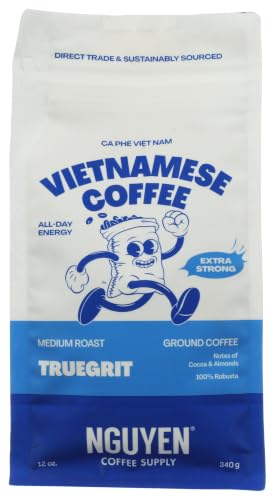
Nguyen Coffee Supply – Truegrit Robusta: Medium Roast
- ✓
- ✓ Bold, balanced body
- ✓ Versatile grind supports any brew
- ✓ Direct-trade story matters
- ✓
- ✕
- ✕ High caffeine may be intense
- ✕ Robusta flavor isn’t for everyone
- ✕
| Bean Type | Robusta |
| Roast Level | Medium roast |
| Origin | Vietnam |
| Flavor Notes | Hazelnuts and zest |
| Caffeine Content Relative to Other Beans | Approximately double |
| Grind Flexibility | All-purpose grind suitable for Phin filters, French press, drip, moka pots |
You pop open the bag and catch a warm, nutty scent that leans into cocoa and hazelnut life after a long day. The Robusta hums with presence, and you notice the medium roast still wears a glossy, oil-free finish that speaks to careful, clean roasting.
On the first pour, the body feels substantial without heaviness, and that caffeine kick you hear about hits you with a calm, steady jolt. It’s bold enough to keep you company through a work-from-home stretch, yet not so aggressive you can’t enjoy dairy or a splash of cream.
The flavor carries gentle zest and a toasty, nutty core. You’ll taste hazelnut notes leaning into a faint citrus lift, all balanced by the roasty warmth that Robusta lovers crave.
The brewing versatility shines—phin, French press, or drip all cooperate with this grind.
Because it’s grown in Vietnam and roasted in Brooklyn, there’s a clean, practical story behind each cup: direct trade with Mr. Ton’s family farm, roasted to preserve character without additives.
It feels honest in the cup, not gimmicky, and that honesty translates into consistent cuppings time after time.
In quick mornings, you’ll appreciate the robust profile that doesn’t demand fancy equipment. In social moments, this coffee stands up to chatter and a bit of sugar or dairy without losing its backbone.
It’s a reliable, no-nonsense pick for fans of strong, straightforward flavor.
PROS_CONTENT:
Blu Ore Black Obsidian Robusta Coffee Beans – Single Origin

- ✓
- ✓ Bold espresso potential
- ✓ High-caffeine energy
- ✓ Versatile grind compatibility
- ✓
- ✕
- ✕ Strong flavor may overwhelm milk
- ✕ Robusta profile not for mild coffee fans
- ✕
| Origin | Vietnam |
| Bean Type | 100% Robusta |
| Roast Level | Medium-Dark |
| Bean Form | Whole bean |
| Caffeine Content Reasoning | Naturally high caffeine due to Robusta variety |
| Recommended Brew Methods | Espresso, Moka pot, French press, AeroPress, drip |
You know that moment when you grind beans and the kitchen fills with a bold, almost volcanic aroma? That’s this Blu Ore Black Obsidian Robusta in action.
You’ll notice the density of the beans and the glossy, jet-black look that signals a robust profile. It’s not shy about its power, and you feel it the moment the aroma hits you.
When you brew, the medium-dark roast delivers a syrupy body that clings to the sides of the cup. It’s the kind of coffee that punches through milk without losing its edge, thanks to the pure Vietnamese robusta backbone.
I found the crema to hold its own, with a chocolatey cacao whisper that lingers after the sip.
Espresso mornings are where this shines. You’ll get that thick crema you expect, plus a deep, almost cacao-like aroma that freshens the room as it pours.
If you’re chasing a caffeine kick, this one delivers it without the jitters you sometimes get from lighter roasts.
Grind consistency matters, and this bean holds its grind well for espresso, moka pot, or a bold French press. In my tests, even a slightly coarser grind still brought forward a powerful, full-bodied cup.
It’s clear this is built for daily, ritual-like brewing sessions.
If you’re after a strong, reliable espresso or a robust daily brew, this single-origin Robusta nails it. It’s a practical, no-nonsense choice for fans of dense, energetic coffee with a long-lasting finish.
What Are the Key Differences Between Arabica and Robusta Coffee?
| Aspect | Arabica | Robusta |
|---|---|---|
| Flavor Profile | Smooth, sweet, with hints of fruit and sugar; less bitter. | Strong, harsh, with a grainy or nutty flavor; more bitterness. |
| Caffeine Content | Lower caffeine levels (about 1-1.5%). | Higher caffeine content (about 2-2.5%). |
| Growing Conditions | Grows at higher altitudes; requires specific climates. | More resilient; thrives in lower altitudes and harsher climates. |
| Cost | Generally more expensive due to careful cultivation. | Less expensive; easier to grow and harvest. |
| Country of Origin | Primarily grown in Latin America. | Often grown in Africa and Asia. |
| Plant Characteristics | Plants are more delicate and susceptible to disease. | Robust plants with a thicker skin, more resistant to pests. |
| Common Uses | Often used in specialty coffee and espresso blends. | Commonly used in instant coffee and espresso blends. |
| Market Share | Accounts for about 60-70% of global coffee production. | Accounts for about 30-40% of global coffee production. |
How Do the Flavor Profiles of Arabica and Robusta Compare?
| Aspect | Arabica | Robusta |
|---|---|---|
| Flavor | Sweet, fruity, and complex with a smooth finish. | Bitter, earthy, and nutty with a stronger aftertaste. |
| Caffeine Content | Lower caffeine levels, about 1.5%. | Higher caffeine content, around 2.5%. |
| Acidity | Higher acidity, contributing to a brighter flavor profile. | Lower acidity, resulting in a heavier, less bright taste. |
| Body | Light to medium body, often described as silky. | Full-bodied, giving a more robust mouthfeel. |
| Origin | Primarily grown in Latin America, East Africa, and parts of Asia. | Commonly grown in Africa, Indonesia, and South America. |
| Common Uses | Used in specialty coffee, espresso blends, and brewed coffee. | Often used in instant coffee, espresso, and as a filler in blends. |
What Are the Caffeine Content Differences in Arabica and Robusta?
| Aspect | Arabica | Robusta |
|---|---|---|
| Caffeine Content | Contains about 1.2% caffeine, providing a milder effect. | Contains about 2.2% caffeine, offering a stronger kick. |
| Caffeine Content per 8 oz cup | Approximately 95 mg | Approximately 150 mg |
| Flavor Profile | Sweeter, more complex flavors with hints of fruit and sugar. | Stronger, harsher taste with earthy and nutty notes. |
| Growing Conditions | Grows best in higher altitudes and cooler climates. | Hardier, thrives in lower altitudes and warmer environments. |
| Health Implications | Generally considered to be less jittery. | Can lead to increased anxiety and jitteriness. |
| Common Uses | Preferred for specialty coffee and espresso. | Often used in instant coffee and blends. |
How Do Growing Conditions Affect Arabica and Robusta Coffee?
- Altitude: Arabica coffee thrives at higher altitudes, typically between 2,000 to 6,000 feet, where cooler temperatures help develop its complex flavors. In contrast, Robusta can grow at lower altitudes, often up to 2,000 feet, and tends to be more resilient to heat and pests, which contributes to its stronger and more bitter taste.
- Climate: Arabica prefers a stable climate with consistent rainfall and temperatures between 60-70°F, leading to a more nuanced flavor profile. Robusta, on the other hand, can tolerate a wider range of temperatures and is less sensitive to environmental changes, which allows it to be cultivated in more diverse regions.
- Soil Quality: Arabica requires rich, well-draining soil with a higher acidity level, which enhances its flavor complexity. Robusta is less particular about soil conditions, allowing it to grow in poorer soils while still achieving a satisfactory yield, although the flavor may be less refined.
- Shade and Sunlight: Arabica coffee plants benefit from partial shade, which helps to regulate temperature and conserve moisture, promoting better flavor development. Robusta, being hardier, grows well in full sun, which can lead to quicker growth and higher yields but may compromise the flavor intricacy.
- Pest Resistance: Arabica coffee is more susceptible to diseases and pests, requiring careful management and often leading to lower yields. In contrast, Robusta has a higher natural resistance to pests and diseases, making it easier and more cost-effective to cultivate in challenging conditions.
What Are the Health Benefits of Drinking Arabica vs. Robusta Coffee?
| Health Benefit | Arabica | Robusta |
|---|---|---|
| Caffeine Content | Lower caffeine levels, around 1.5% – smoother effects. | Higher caffeine content, about 2.2% – more stimulating effects. |
| Antioxidants | Rich in antioxidants, beneficial for overall health. | Contains fewer antioxidants but still provides some health benefits. |
| Flavor Profile | Fruity and sweet notes, often considered more flavorful. | Stronger, harsher taste with earthy undertones. |
| Cardiovascular Health | May support heart health due to higher antioxidant levels. | Can also support heart health but may have a more pronounced effect due to caffeine. |
| Mental Health | Can enhance mood and cognitive function due to lower caffeine content. | Higher caffeine content may provide a stronger boost in alertness and mood. |
| Digestive Health | Lower acidity, which may be gentler on the stomach. | Higher acidity, which may cause discomfort for some individuals. |
| Nutritional Value | Contains more vitamins and minerals such as B vitamins. | Has some vitamins and minerals, but generally fewer than Arabica. |
Which Is Preferred by Coffee Experts: Arabica or Robusta?
The debate between Arabica and Robusta coffee often centers on flavor, caffeine content, and growing conditions.
- Arabica: Known for its smooth, complex flavor profile, Arabica beans usually have a higher acidity and a range of sweeter, fruity notes.
- Robusta: These beans tend to be stronger and more bitter, often characterized by earthy and nutty flavors, with a higher caffeine content than Arabica.
Arabica coffee accounts for about 60-70% of the world’s coffee production and is generally considered superior in taste, making it the preferred choice among coffee connoisseurs. It grows best at higher altitudes and in cooler climates, which contributes to its complex flavor profile and greater variety. Arabica is also more susceptible to pests and diseases, requiring careful cultivation practices.
Robusta, on the other hand, is hardier and can thrive in lower altitudes and hotter climates, making it easier to cultivate and more resistant to pests. This resilience translates into lower production costs, but the trade-off is often a less desirable flavor profile, which some find too bitter. Despite this, Robusta is favored for its higher caffeine content and is commonly used in espresso blends to provide a stronger kick and a better crema.
How Should You Decide Between Arabica and Robusta Coffee Based on Your Preferences?
Choosing between Arabica and Robusta coffee depends on your taste preferences, caffeine tolerance, and desired flavor profile.
- Flavor Profile: Arabica coffee is known for its smooth, complex flavors and aromatic qualities, often featuring hints of fruit or sugar. In contrast, Robusta tends to have a stronger, more bitter taste with earthy or nutty undertones, making it less palatable for some coffee drinkers.
- Caffeine Content: Robusta coffee contains significantly more caffeine than Arabica, which can lead to a more intense kick and a stronger body. If you prefer a higher caffeine content to boost your energy, Robusta might be the better choice.
- Acidity Levels: Arabica coffee generally has a higher acidity, contributing to its bright and lively taste. On the other hand, Robusta has lower acidity, making it smoother and potentially easier on the stomach for those sensitive to acidic beverages.
- Brewing Method: The choice of brewing method can also influence your preference; Arabica beans are often best suited for methods like pour-over or French press, which highlight their delicate flavors. Robusta beans are commonly used in espresso blends due to their creamier texture and ability to produce a rich crema.
- Price and Availability: Arabica coffee beans tend to be more expensive and are often seen as a premium option due to their cultivation requirements. Robusta beans are generally cheaper and more widely available, making them an appealing option for budget-conscious consumers.