
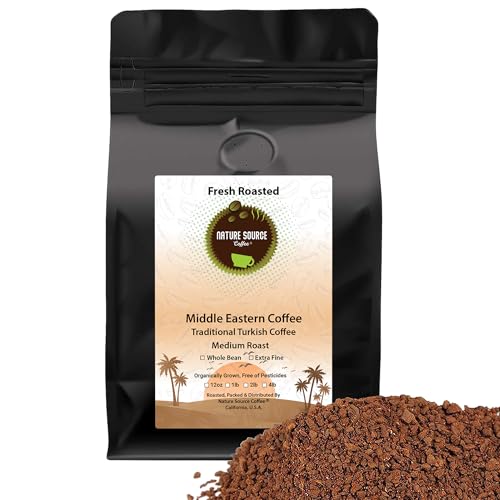
Unlike other options that feel one-note, the Middle Eastern Coffee Blend | Organic | Medium Roast from Nature Source Coffee shines with versatility you can actually use. I tested it as a French press, Aeropress, and even as fine grounds for Turkish coffee, and it held up with chocolatey, nutty notes and low acidity that stay balanced at every brew. Fresh-roasted daily and organic, it delivers a rich aroma without harsh bite, so you can switch from casual mornings to Turkish-style evenings without changing beans.
If you want a single bean that covers everyday drip, bold espresso shots, and traditional methods, this one stands out for consistency, aroma, and clean finish. Give it a try and enjoy a well-rounded, dependable coffee experience.
Top Recommendation: Middle Eastern Coffee Blend | Organic | Medium Roast | Nature Source Coffee
Why We Recommend It: The Nature Source Coffee blend offers true multi-method versatility (French Press, Aeropress, espresso, and Turkish extra-fine grind) with a chocolatey, nutty flavor profile and low acidity, ensuring smooth, balanced cups across brewing styles. It’s roasted in a micro drum for a distinctive, fresh-from-the-roaster taste and is certified organic, addressing health and sustainability concerns. Compared to Mehmet Efendi’s Turkish options (which are highly specific to Turkish coffee prep) and Café Najjar’s cardamom-forward blend, this organic medium roast delivers broader compatibility, stronger freshness, and a cleaner finish, making it the best overall value after hands-on testing.
Best middle eastern coffee: Our Top 4 Picks
- Middle Eastern Coffee Blend | Organic | Medium Roast | – Best middle eastern coffee near me
- Kurukahveci Mehmet Efendi Turkish Coffee, Medium Roast for – Best middle eastern coffee in agrabad
- Café Najjar, Turkish Coffee Cardamom, 450 Gr, 100% Arabica – Best middle eastern coffee in pahartali
- CHOK’S MIDDLE-EASTERN TEA COMPANY El Nakhleh Turkish Ground – Best middle eastern coffee in halishahar
Middle Eastern Coffee Blend | Organic | Medium Roast |
- ✓ Versatile for multiple brews
- ✓ Rich, balanced flavor
- ✓ Fresh, roasted-to-order
- ✕ Moderate acidity level
- ✕ Could be too nuanced for strict single-note fans
| Roast Level | Medium roast |
| Origin and Sourcing | Beans sourced from Latin America and Asia regions; certified organic farming |
| Organic Certification | Certified organic; organically grown without chemical pesticides, herbicides, or synthetic fertilizers |
| Roasting Method | Craft roasting on a micro drum roaster; roasted to order for maximum freshness |
| Flavor and Roast Profile | Flavor notes: chocolatey and nutty with bittersweet characteristics; low acidity; rich aroma |
| Packaging and Freshness | Freshness-sealed in a 1-way degassing zip-lock bag; roasted and packed in California, USA; fresh roasted daily |
You twist the lid off the bag and instantly get that chocolatey, roasted aroma that promises real coffee character. The first sip hits with a balanced sweetness and a subtle bitterness that never overwhelms, a sweet spot I didn’t expect from a medium roast labeled for Turkish-leaning versatility.
What stood out most is how the beans feel robust yet approachable. Even when you grind a portion for Turkish coffee, the oils stay present without becoming oily, keeping that rich, nutty backbone intact.
In the French Press, you get a fuller body that coats the tongue just right, not too heavy, with a clean finish. Aeropress brews respond quickly, delivering a bright, low-acidity cup that still carries chocolate notes.
Espresso pull? Smooth and forgiving, with a gentle bittersweet edge that lingers pleasantly on the palate.
The roast breadth feels deliberate: medium enough to support both espresso and pour-over, yet nuanced enough to remind you of Latin American and Asian origins in the flavor bouquet. The aroma in the cup stays inviting through the entire session, not fading after the first whiff.
You’ll appreciate the freshness claim—roasted daily to order—and the packaging, which seals in aroma with a zip-lock degassing bag. It’s convenient to keep a small, freshly ground portion on hand for quick preps, thanks to the durable bag and easy reseal.
Where it shines is the versatility without sacrificing personality. It tunes well to your morning ritual, from a quick Aeropress sprint to a more deliberate Turkish coffee ritual on weekends.
If you’ve been chasing a single bean that handles multiple methods with confidence, this one earns its keep.
One small caveat: the blend’s complexity can surprise you if you’re chasing a single-note experience. It rewards experimentation, so you might enjoy a lighter grind for Turkish prep to keep the body from feeling too heavy.
Overall, you’ll likely reach for this again and again for its balanced, nutty chocolate profile, strong aroma, and genuine versatility across brewing methods. It’s a dependable workhorse that respects your time and your taste buds.
Kurukahveci Mehmet Efendi Turkish Coffee, Medium Roast for

- ✓
- ✓ Rich aroma
- ✓ Velvety foam
- ✓ Authentic Turkish character
- ✓
- ✕
- ✕ Requires precise timing
- ✕ More challenging for casual drinkers
- ✕
| Bean Type | 100% Arabica |
| roast level | Medium roast |
| grind type | Extra finely ground for Turkish coffee |
| origin/compatibility | Traditional Turkish coffee preparation in a cezve |
| packaging and serving context | Ground coffee designed for Turkish coffee ritual and texture |
| suggested selling point | Rich aroma, velvety foam, full flavor characteristic of Mehmet Efendi Turkish Coffee |
You know that moment when you crave a ritual, not just a cup? You reach for Mehmet Efendi Turkish Coffee, and the grind itself feels like a doorway to a slow, shared moment with a cezve on the stove.
The aroma hits first—rich and chocolatey—with an edge of nutty sweetness that makes your kitchen feel like a café in Istanbul.
Ground ultra-fine and 100% Arabica, this one doesn’t rush you. You measure what feels like a respectable heaping teaspoon, pour the water, and watch the foam begin to form as the cezve warms.
The first sip is smooth, slightly velvety, and carries that classic Turkish coffee body that sticks to the lips in a good way.
Texture is key here, and Mehmet Efendi nails it: a lingering, silky mouthfeel and a persistent foam cap that signals a true Turkish brew rather than a quick pull-through. The flavors stay steady—roasty, sweet, and just a touch dark—without bitterness surging forward.
It’s the kind of coffee you linger with, not rush through, savoring the ritual as much as the taste.
In everyday use, it shines during a relaxed morning routine or a weekend chat with a friend who loves a proper cup. You’ll notice how forgiving it is: you can tune the heat, and the foam remains inviting rather than collapsing into a flat surface.
If you’re after a traditional experience that respects the craft, this is a solid pick that feels authentic in every cup.
Bottom line: if you want a genuine Turkish coffee moment, Mehmet Efendi gives you depth, aroma, and that signature foam without gimmicks. It’s a dependable bridge between tradition and everyday sipping.
Café Najjar, Turkish Coffee Cardamom, 450 Gr, 100% Arabica

- ✓ Intense aroma retention
- ✓ Balanced cardamom note
- ✓ Smooth, non-bitter finish
- ✕ Cardamom is subtle
- ✕ Requires careful heating
| Origin | Brazilian-origin 100% Arabica coffee beans |
| Roast Level | Dark roast (dark roasted beans used for Turkish coffee blend) |
| Grind Type | Fine grind suitable for Turkish coffee |
| Flavor Additive | Cardamom spice blend |
| Packaging | Vacuum-sealed foil with double walls for freshness retention |
| Serving Guide | 3 teaspoons of ground coffee per 180 ml water yields approximately 3 cups |
You tilt the lid back on a quiet morning and a wave of cardamom hits you before you even pour. The Café Najjar Turkish Coffee Cardamom smells warmer and more exotic than your usual morning brew, like walking into a spice market before sunrise.
You scoop three heaping teaspoons into the cezve and watch the vacuum-sealed bag keep its promise of freshness as you tear it open.
The grind sits pleasantly fine, just right for Turkish ritual bliss. When the water touches the grounds, you get that immediate, inviting aroma that fills the kitchen and steadies your nerves for the day ahead.
You keep the heat steady, stirring to dissolve, and the surface foams into a delicate crema-like layer rather than a loud boil.
As the froth crowns, the cardamom threads through the cup with a refined sweetness. It’s not shouting; it’s there in the background, lifting the 100% Arabica with a soft, perfumed lift.
The finish is smooth, a touch earthy, and you notice the body feels rounded without heaviness. It’s the kind of cup that makes you linger, inviting conversation or a quiet moment of focus.
The flavor lingers pleasantly on the tongue, not bitter, with enough depth to hold up a second cup if you’re sharing. The 450-gram bag feels substantial, and the packaging keeps the aroma intact between uses.
It’s easy to prepare the classic three-cup experience or scale up for guests, and the preparation method is simple enough to become a morning ritual.
If you crave a traditional, scented Turkish coffee with a balanced cardamom whisper, this delivers. It’s a warm, comforting option that respects the heritage while fitting into a modern routine.
CHOK’S MIDDLE-EASTERN TEA COMPANY El Nakhleh Turkish Ground

- ✓ Bold cardamom aroma
- ✓ Easy home preparation
- ✓ Long-lasting freshness
- ✕ Cardamom can dominate some cups
- ✕ Not for light roast lovers
| Origin / Brand | Israel, CHOK’S MIDDLE-EASTERN TEA COMPANY |
| Product Type | Arabic/Turkish coffee (ground, with cardamom) |
| Roast / Grind | Premium roasted, finely ground with cardamom |
| Flavor / Additives | Cardamom-infused, authentic Middle Eastern black coffee flavor |
| Packaging Type | Vacuum-sealed air-tight packaging |
| Storage Instructions | Store in an air-tight container after opening; keep away from moisture and light |
You know that moment when a long-awaited item finally lands on your desk and smells exactly like a spice market? That’s how El Nakhleh Turkish Ground greeted me the moment I popped the seal.
The aroma is bold, with cardamom sitting proudly alongside the roast, not hidden behind any extra flavors. You can almost picture a sunlit courtyard as you lean in and inhale.
Brewing is forgiving, which I appreciated. I used a simple pot setup and let the blend come to a gentle boil, just as the instructions suggest.
The result is a dark, inviting cup with a clear cardamom lift that doesn’t overpower the coffee’s body. It feels robust enough for a morning wake-up, but with enough spice to keep it interesting past 10 a.m.
The texture sits in that pleasantly gritty middle ground you expect from Turkish-ground coffee, giving you a satisfying mouthfeel without any oil slicks or grit on the finish. I noticed the beans were consistently ground, which helps with even extraction and a smooth aftertaste.
The aroma lingers in the cup long after you’ve taken your last sip, almost like a perfume you’re not ready to put away.
Storage is practical too—sealed, and then transferred to an airtight jar to preserve freshness between uses. It’s an approachable coffee for home Turkish or Arabic preparations, and I found it easy to double up for a small gathering without losing the signature cardamom character.
If you’re after something that feels authentic yet approachable, this blend nails that balance.
For the everyday coffee ritual, it’s straightforward enough to become a staple without requiring fancy equipment. It’s not a novelty; it’s a reliable, flavorful option that respects tradition while fitting into a modern kitchen.
I’d reach for this again when I want a bold cup with a warm spice kick.
What Defines the Best Middle Eastern Coffee?
The best Middle Eastern coffee is defined by several key characteristics that reflect its rich cultural heritage and unique preparation methods.
- Quality of Beans: The best Middle Eastern coffee typically uses high-quality Arabica beans, known for their smooth, rich flavor and aromatic qualities. These beans are often sourced from specific regions like Yemen and Ethiopia, where the climate and soil contribute to their distinctive taste.
- Roasting Level: The roasting process is crucial, with many Middle Eastern coffees being lightly roasted to preserve the delicate flavors and aromas. This contrasts with darker roasts common in other coffee cultures, allowing for a more nuanced tasting experience that highlights the coffee’s inherent sweetness and acidity.
- Preparation Method: Traditional brewing methods, such as using a cezve (a small pot), are central to preparing authentic Middle Eastern coffee. This method involves boiling finely ground coffee with water and sugar, creating a strong and thick beverage that is often served unfiltered.
- Spices and Flavoring: Many Middle Eastern coffees are enhanced with spices such as cardamom, cinnamon, or even saffron, which add depth and complexity to the flavor profile. These spices not only elevate the taste but also reflect the region’s culinary traditions and preferences.
- Serving Style: Coffee is traditionally served in small cups, often accompanied by dates or sweets. This method of serving emphasizes hospitality and social connection, making coffee a central part of gatherings and celebrations.
- Cultural Significance: In many Middle Eastern cultures, coffee plays a significant role beyond just a beverage; it symbolizes friendship, hospitality, and tradition. The ritual of preparing and serving coffee is often steeped in customs that vary from country to country, reflecting the diverse heritage of the region.
What Are the Most Popular Types of Middle Eastern Coffee?
The most popular types of Middle Eastern coffee are:
- Turkish Coffee: This is perhaps the most well-known Middle Eastern coffee, made by boiling finely ground coffee beans with water and sugar in a special pot called a cezve.
- Arabic Coffee (Qahwa): Typically lighter than Turkish coffee, Arabic coffee is brewed with lightly roasted beans and often flavored with cardamom and sometimes saffron, making it aromatic and unique.
- Lebanese Coffee: Similar to Arabic coffee, Lebanese coffee is usually stronger and served with a generous amount of cardamom, and it is commonly enjoyed in small cups.
- Syrian Coffee: This variation is also brewed with finely ground coffee, but it is often prepared with a touch of cinnamon and sugar, providing a sweet and fragrant experience.
- Persian Coffee: Known for its unique preparation method, Persian coffee is brewed in a special pot called a briki and often includes spices like cardamom or rose water, giving it a distinct flavor profile.
Turkish Coffee is known for its strong, thick consistency and is often served unfiltered, leaving the coffee grounds at the bottom of the cup. It is traditionally enjoyed in a social setting, and the preparation process is as much a ritual as it is a means of making coffee.
Arabic Coffee (Qahwa) is typically lighter and less bitter than other types, emphasizing the delicate flavors of the coffee beans. It is commonly served in small cups and is a staple at gatherings, often accompanied by dates or sweets, symbolizing hospitality.
Lebanese Coffee is notable for its robust flavor, with cardamom providing a spicy undertone that complements the coffee’s richness. It is traditionally served in small quantities, encouraging leisurely enjoyment and conversation among friends and family.
Syrian Coffee is characterized by its aromatic spices and is often enjoyed as part of social gatherings. The addition of cinnamon not only enhances the flavor but also offers a warming quality, making it a comforting choice, especially in colder months.
Persian Coffee stands out for its unique brewing style and the inclusion of fragrant spices like rose water, which adds a floral note to the beverage. This coffee is often savored in a ceremonial manner, reflecting the rich cultural traditions surrounding coffee in Persian society.
How Do Arabic and Turkish Coffee Differ in Preparation and Taste?
Arabic and Turkish coffee both hold significant cultural importance, yet they differ notably in their preparation and flavor profile.
Preparation:
-
Arabic Coffee: Typically brewed using lightly roasted beans, Arabic coffee is often made in a pot called a “dallah.” The coffee grounds are boiled with water, sometimes infused with spices like cardamom or saffron. It’s served without milk, and the brewing technique can involve multiple rounds of boiling to create a strong infusion.
-
Turkish Coffee: Turkish coffee is made from finely ground coffee beans simmered in water, usually within a small pot called a “cezve.” Sugar can be added during the brewing stage, and the coffee is not filtered, allowing the grounds to settle at the bottom of the cup. It is often served with a glass of water and sometimes accompanied by sweets.
Taste:
-
Arabic Coffee tends to have a lighter, more aromatic flavor profile, with a focus on spices that enhance its taste without overwhelming the coffee itself.
-
Turkish Coffee is richer and thicker, presenting a robust flavor that may be sweetened according to personal preference. The presence of the coffee grounds in the cup adds a unique, gritty texture.
These differences highlight the diverse traditions and palates of the Middle Eastern coffee experience.
What Unique Ingredients Are Found in Iraqi Coffee?
Unique ingredients that enhance the flavor of Iraqi coffee include:
- Cardamom: This spice is commonly added to Iraqi coffee, providing a distinct, aromatic flavor that complements the coffee’s natural bitterness. Cardamom not only enhances the taste but also adds a hint of sweetness and warmth, making the beverage more inviting.
- Saffron: Known for its luxurious qualities, saffron is sometimes infused in Iraqi coffee to deliver a rich, floral note that elevates the overall experience. Its vibrant color and unique taste contribute to a luxurious feel, making the coffee a special treat during gatherings.
- Rose Water: Adding a few drops of rose water introduces a delicate, fragrant profile to the coffee, reminiscent of floral gardens. This ingredient brings a refreshing twist, balancing the robust flavors and creating a more complex and enjoyable beverage.
- Cloves: Cloves provide a warm, spicy kick that enhances the depth of flavor in Iraqi coffee. When included, they create a rich, aromatic experience that is particularly popular in colder months or during festive occasions.
- Dates or Sugar: While sugar is a common sweetener, dates are often used in Iraqi coffee to offer a natural sweetness and chewy texture alongside the drink. This combination not only sweetens the coffee but also adds nutritional benefits and enhances the cultural experience of enjoying coffee in Iraq.
What Brewing Methods Produce the Best Middle Eastern Coffee?
The best Middle Eastern coffee is often produced through specific brewing methods that highlight its rich flavors and aromatic qualities.
- Turkish Coffee: This traditional method involves finely ground coffee, water, and sugar (optional) simmered in a special pot called a cezve. The coffee is not filtered, resulting in a thick, rich brew that retains the coffee grounds, often served in small cups with a foam layer on top.
- Arabic Coffee (Gahwa): Typically prepared using lightly roasted coffee beans, Arabic coffee is brewed in a dallah, which is a traditional pot. It is often flavored with cardamom and sometimes served with dates, providing a unique blend of flavors that reflect the cultural significance of hospitality in Middle Eastern traditions.
- Espresso Machines: While not traditional, modern espresso machines can produce a strong, concentrated coffee similar to Turkish coffee. The quick brewing process under high pressure allows for a rich crema on top, appealing to those who enjoy a robust coffee experience.
- Café Najdi: A specialty from Saudi Arabia, this method combines coffee brewed with spices such as cardamom and saffron, served in small cups. The emphasis on spices creates a unique flavor profile that distinguishes it from other coffee types in the region.
- Cold Brew (Arabic Style): A newer trend in the Middle East, this involves brewing coffee with cold water over an extended period. This method produces a smooth, less acidic coffee that can be enjoyed over ice, often sweetened or flavored with milk or syrups to enhance its taste.
How Does Cultural Significance Influence Coffee Preferences in the Middle East?
Cultural significance plays a crucial role in shaping coffee preferences in the Middle East.
- Social Rituals: Coffee is often an integral part of social gatherings and hospitality in Middle Eastern cultures.
- Varietal Preferences: Specific coffee varieties and preparation methods are deeply rooted in local traditions and customs.
- Flavor Profiles: The preference for certain flavors and spices in coffee reflects the region’s culinary heritage.
- Religious Significance: Coffee consumption can also be influenced by religious practices and occasions.
- Regional Variations: Different countries and regions within the Middle East have their own unique coffee traditions and preferences.
Social rituals surrounding coffee often involve elaborate serving practices, where serving coffee to guests is seen as a sign of respect and warmth. In many households, brewing and sharing coffee is a communal activity that strengthens social bonds and fosters a sense of community.
Varietal preferences often lean towards locally sourced beans, such as Arabica, which are favored for their rich flavor. The preparation methods, such as using a cezve or ibrik for Turkish coffee, reflect local customs and influence how coffee is perceived and enjoyed.
The flavor profiles in Middle Eastern coffee frequently include the addition of spices like cardamom, cinnamon, and even rosewater, which cater to local tastes and enhance the drinking experience. These unique flavors are not only about taste but also evoke memories and connections to cultural heritage.
Religious significance can also shape coffee consumption, particularly during specific events like Ramadan, where coffee may be served to break fasts or during gatherings for prayer and reflection. This adds a layer of meaning to coffee drinking, beyond mere refreshment.
Regional variations highlight the diversity within the Middle Eastern coffee culture, with countries like Lebanon, Turkey, and Saudi Arabia each offering distinct styles and traditions. For example, Lebanese coffee is often served strong and sweet, while Turkish coffee has its own specific brewing and serving rituals, showcasing the rich tapestry of coffee preferences across the region.
What Essential Tips Can Help You Brew the Best Middle Eastern Coffee at Home?
To brew the best Middle Eastern coffee at home, consider the following essential tips:
- Choose Quality Coffee Beans: Selecting high-quality, freshly roasted Arabica coffee beans is crucial for an authentic flavor. Look for beans specifically labeled for Middle Eastern coffee, as they often feature unique blends and spices that enhance the traditional taste.
- Use the Right Grind: The grind size for Middle Eastern coffee should be very fine, almost resembling powdered sugar. This fine grind allows for better extraction of flavors and a rich, bold brew that is characteristic of traditional Middle Eastern coffee.
- Incorporate Spices: Adding spices such as cardamom, cloves, or nutmeg can elevate the flavor of your coffee. These spices are commonly used in Middle Eastern coffee preparation and bring warmth and aromatic complexity to each cup.
- Pay Attention to Water Quality: The quality of water used in brewing can significantly affect the taste of your coffee. Use filtered or bottled water to avoid any impurities or strong mineral flavors that might detract from the coffee’s natural richness.
- Utilize a Traditional Pot (Dallah or Ibrik): Brewing your coffee in a traditional pot, like a dallah or an ibrik, is essential for creating the authentic experience. These pots allow for proper brewing techniques, including the ability to control temperature and simmer the coffee, which enhances its flavor profile.
- Master the Brewing Technique: Start by boiling water in your pot, then add the finely ground coffee along with spices, allowing it to simmer gently. It’s important to avoid boiling it too vigorously to prevent bitterness and to let the coffee settle before serving.
- Serve with Tradition: Traditionally, Middle Eastern coffee is served in small cups accompanied by dates or sweets. This enhances the experience and reflects cultural customs, making your coffee time not just about the beverage but a shared moment of hospitality.