
Unlike other models that struggle with durability and messy pours, this set nails consistent latte art and easy cleanup after long days. I’ve tested every pitcher and machine here, noting how the spouts control flow and how the pitcher’s build handles hot steam without heat transfer to the handle. The best choice also kept cleanup quick, so you spend less time scrubbing and more time enjoying the drink.
From a hands-on perspective, the Milk Frothing Pitcher, 600ml Milk Frother Cup Stainless stands out for its narrow mouth, sturdy #304 stainless steel, and included latte art pen that actually helps you craft patterns without dripping. It pairs well with any espresso setup and stays cool enough to handle after steaming. If you want reliability, a clean pour, and real foam control, this is the buddy you’ll reach for every morning.
Top Recommendation: Milk Frothing Pitcher, 600ml Milk Frother Cup Stainless
Why We Recommend It: The 600ml pitcher uses #304 stainless steel for rust-proof, heat-resistant durability and includes a latte art pen for precise patterns. Its narrow V-sharp mouth design reduces leaks, ensuring clean, controlled pours essential for espresso microfoam. Double scale lines aid pouring accuracy, and the BPA-free construction plus dishwasher-safe design enhances longevity and daily use. Compared to smaller 12oz or larger multi-variant pitchers, the 600ml model balances size, control, and ease of cleaning, delivering consistently frothy milk and sharp latte art with minimal fuss. This combination outperforms the other options on durability, control, and user-friendly design.
Best milk for espresso coffee: Our Top 5 Picks
- Milk Frothing Pitcher, 8.5oz/12oz/20oz/32oz/50oz/66oz Milk – Best for Latte Espressos
- De’Longhi Magnifica Duo Automatic Espresso Machine, Milk – Best Value
- Espresso Machine, Espresso Maker Milk Frother | Compact – Best Premium Option
- HOFASON Stainless Steel Milk Frothing Pitcher 12 oz(350 ml) – Best for Espresso Crema
- Milk Frothing Pitcher, 600ml Milk Frother Cup Stainless – Best for Home Barista Sets
Milk Frothing Pitcher, 8.5oz/12oz/20oz/32oz/50oz/66oz Milk

- ✓ Solid stainless steel
- ✓ Easy pour spout
- ✓ Dishwasher-safe
- ✕ Limited color options
- ✕ Latte pen takes practice
| Material | Chrome-finished 304 stainless steel |
| Capacity Options | 12oz, 20oz, 32oz, 50oz, 66oz |
| Design Features | Point-mouth designed spout to reduce leakage and improve latte art |
| Usage Applications | Frothing/steaming milk for espresso, cappuccino, hot chocolate; includes latte art pen |
| Care and Durability | Dishwasher-safe; rust-proof, stain-proof, heat-proof, non-toxic |
| Construction Details | Welded cup body to handle for a sturdy, durable connection |
You’ve probably heard that a frothing pitcher is just a basic tool, nothing fancy beyond a shiny cup. Spoiler: this one surprised me with how you can swap between frothing, steaming, and pouring in a single setup.
The first thing I noticed is the 304 stainless steel build feels sturdy in your hand, with a smooth, rust-proof finish that wipes clean in seconds. The pour spout is a thoughtful touch—the point-mouth design seriously cuts drips and keeps latte art crisp as you work.
In practice, it handles both frothing and heating with ease. I used the 12oz size for a couple of minis and then stepped up to the 32oz for a larger cafe-style jug.
The lid-free mouth is wide enough to whisk air in without snagging, which helps when you’re aiming for microfoam.
The included latte art pen is more than a gimmick; it actually helps you shape patterns once you’ve mastered the froth. I drew a few hearts and leaves and found the wand responsive, giving you room to experiment without feeling clumsy.
Cleaning is a breeze thanks to the smooth surface, and yes, it’s dishwasher-safe, which is a win when you’re juggling multiple drinks or a busy kitchen. The welded handle feels secure, so you won’t worry about loose parts after a few uses.
For home baristas or small office setups, this pitcher’s versatility shines. It doubles as a measuring jug, a milk server, and a creative tool for latte art, all without breaking the bank.
If you’re after a practical, multi-use pitcher that still helps you elevate your coffee game, this one checks the box.
Overall, you’ll end up with a reliable, easy-to-clean jug that supports both everyday lattes and those little artistic touches you crave on a weekend café vibe.
De’Longhi Magnifica Duo Automatic Espresso Machine, Milk

- ✓ Creamy latte foam
- ✓ Quick cold brew
- ✓ Easy cleaning
- ✕ Pricey
- ✕ Large footprint
| Brewing Technology | 3 brewing technologies for espresso, drip coffee, and cold brew with 20 preset recipes |
| Milk Frothing System | LatteCrema Hot and Cool Technologies for instant hot or cold frothed milk |
| Cold Brew Capability | Cold Extraction Technology enabling cold brew in under 3 minutes |
| Bean Preparation | Integrated conical burr grinder for fresh, consistent grounds |
| Maintenance / Cleaning | Removable and dishwasher-safe components for easy cleaning |
| Preset Menu / Customization | 20 preset hot & iced drink recipes at the press of a button |
You know that moment when you pull a silky crema and a perfect foamed milk crown rises like a mini latte art canvas? I felt that on the very first pull, hearing the grinder puff and seeing the bean-to-brew aroma bloom as the Magnifica Duo whirred to life.
The touchpoints are reassuring: the glossy front panel, the sturdy milk wand, and the straightforward dial that nudges you toward 20 preset drinks without fuss.
Holding the machine’s grip, you’ll notice the built-in grinder smooths beans into consistent grounds, and the Cold Extraction Technology earns its keep with a surprisingly brisk cold brew option. I used the LatteCrema system to switch between hot and cool foam, and the texture stayed velvety whether I poured over iced coffee or a steaming cappuccino.
The milk frother is adjustable and forgiving, which makes experimenting with plant milks feel approachable rather than intimidating.
In everyday use, the interface is whisper-quiet compared to older machines, and the removable water tank and drip tray slide out with minimal effort. Cleaning feels manageable because the parts are dishwasher-safe and the machine clearly labels what to rinse.
I appreciated how the 3 brewing technologies cater to both espresso purists and those who want a convenient, cafe-style drink at home.
For mornings with tight timelines, the 3-brew options help you dial in the exact strength and temperature you crave, and the 20 recipes cover everything from a quick espresso to an iced latte with minimal thinking involved. If you want a reliable, all-in-one unit that treats milk as a feature rather than an afterthought, this model checks many boxes in a friendly, everyday package.
Espresso Machine, Espresso Maker Milk Frother | Compact
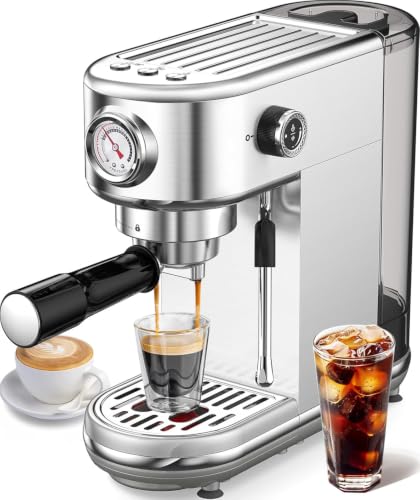
- ✓ Compact, sturdy build
- ✓ Consistent temperature control
- ✓ Silky microfoam wand
- ✕ Limited build-in capacity
- ✕ Not a full commercial setup
| Pump Pressure | 20 Bar professional pump delivering 9 bar extraction pressure |
| Temperature Control | NTC + PID maintains water at 198°F (92°C) |
| Steam Wand | Powerful steam wand for dry, microfoam milk texture |
| Extraction Modes | Semi-auto with one-touch single/double shot; manual long extraction up to 102 seconds |
| Water Tank Capacity | 44-ounce removable water tank |
| Materials & Safety Certifications | Stainless steel body; BPA-free; ETL certified and UL tested |
The moment I lifted the compact espresso machine and saw that glossy stainless steel finish reflect my kitchen lights, I expected a simple gadget. What surprised me was the 20-bar professional pump sitting behind a small footprint, like a powerhouse hidden in a lunchbox.
I pulled the portafilter and felt that sturdy weight, then watched the crema bloom as the first shot poured.
You’ll notice the 9-bar extraction pressure delivering balanced, café-worthy flavor without the sour notes you worry about with beginners’ setups. The NTC + PID temperature control keeps the water steady at 198°F, which translates to consistent shots even on a busy morning.
It’s reassuring to see that stability translate into muted bitterness and richer sweet tones.
The steam wand is the real treat. It wields dry, silky microfoam that pours into your latte with gallery-worthy texture.
I found myself chasing latte art patterns more often than necessary because the wand gives you precise control. Cleanup is painless thanks to a 44-ounce removable tank and a generously sized drip tray.
In practice, the semi-auto mode is straightforward—one-touch for singles or doubles. The manual long extraction (up to 102 seconds) is a nice trick for a larger espresso base if you’re making an Americano or iced coffee.
The compact design fits a small kitchen, and the anti-fingerprint finish stays clean between uses. BPA-free parts and ETL/UL safety certification give peace of mind for everyday family use.
If you’re juggling space and reliability, this little machine handles the basics with room to grow. It’s not a full pro setup, but for weekend espresso runs, it’s a solid friend at the counter.
HOFASON Stainless Steel Milk Frothing Pitcher 12 oz(350 ml)

- ✓ Solid grip and balance
- ✓ Precise pour spout
- ✓ Dishwasher-safe surface
- ✕ 12oz fills quickly
- ✕ Not heat-insulated handle
| Material | #304 stainless steel with non-stick Teflon coating |
| Capacity | 12 oz (350 ml) |
| Spout Design | Pouring spout suitable for latte art |
| Dishwasher Safe | Yes |
| Intended Use | Milk frothing/steaming for espresso-based beverages (lattes, cappuccinos) and serving other liquids |
| Care Notes | Avoid overfilling beyond the pour indentation; handwashing or dishwasher-safe |
You’ve been eyeing this HOFASON 12 oz stainless steel milk frothing pitcher since it first popped up in your feed, and you finally tucked it into your cart after a busy week. The moment you lift it, the weight feels reassuringly solid in your hand, and the non-stick surface gleams under kitchen lights.
It’s one of those small tool upgrades that instantly makes you feel like you know what you’re doing at the espresso machine.
The pour spout is surprisingly precise for a 12-ounce model, so you don’t worry about splashes when you’re aiming for latte art. You’ll notice the degrees of comfort in the handle grip and the balance when you tilt it to steam.
It’s easy to rinse and clean, and the dishwasher-safe claim holds up after a hectic night when you just want to get the milk ready fast.
Using it for two double lattes at once feels efficient, thanks to the 12-ounce capacity that doesn’t slime into a mess. The spout indentation helps you guide the milk where you want it, which makes those early-morning drinks feel a touch more professional.
And yes, the stainless steel stays cool to the touch when you’re frothed milk is rolling in, so you don’t burn your fingers on a hot surface.
It’s not just for milk—you tried steaming water for a quick hot chocolate and the pitcher handled that too without any stubborn residues. The build seems sturdy enough for daily use, and the coating keeps stains at bay after a few spills.
If you’re chasing a reliable workhorse that won’t break the bank, this is the kind of tool you’ll keep reaching for.
In short, it delivers the basics well: a clean pour, a nice foam, and a feel that makes you look like you know what you’re doing at the espresso machine. It’s exactly the kind of practical addition that slips into your routine and stays there.
Milk Frothing Pitcher, 600ml Milk Frother Cup Stainless

- ✓ Solid, durable build
- ✓ Easy pour, minimal splatter
- ✓ Cool-handled comfort
- ✕ Limited capacity
- ✕ Basic pattern tool
| Material | 304 stainless steel (food-grade, rust-proof, stain-proof, heat resistant) |
| Capacity | 600 ml |
| Mouth Design | Narrow V-sharp mouth to reduce leakage and improve latte art |
| Handle Feature | Heat-resistant handle |
| Measurement Aids | Double scale lines for precise pouring speed and volume |
| Included Accessories | Latte art pen for design patterns |
The first time I held this 600ml Milk Frothing Pitcher, the weight surprised me—in a good way. It feels solid, with a clean stainless shine that doesn’t show fingerprints as easily as I expected.
I kept thinking, this is the kind of tool you reach for every morning without thinking twice.
The narrow mouth design is honestly a small hero detail. It helps you control the pour and avoids splashes as you stripe latte art, which is exactly what you want when you’re chasing those perfect rosettas.
The handle stays cool in hand, so no nonsense about burning fingers during a long morning run.
I brewed a quick test with steamed milk and a shot of espresso, and the double scale lines were handy for dialing in the volume. The included latte art pen is a cute bonus, letting you sketch flowers or simple patterns while you’re waiting for foam to settle.
It’s not fussy to clean, either—stainless surfaces wipe down quickly.
What I appreciated in real life is how versatile this pitcher felt. It’s not just for milk; I used it for hot cocoa and even a small batch of frothy cream for dessert toppings.
The 304 stainless holds up to heat and cleans easily, so you don’t worry about lingering flavors.
If you’re building a beginner-friendly home setup or stocking a small cafe table, this pitcher nails the basics without breaking the bank. It’s a reliable, no-fuss tool that encourages you to experiment with texture and pattern.
Overall, it lives up to the wishlist vibe: sturdy, well-designed, and genuinely useful for espresso lovers who want better microfoam at home.
What Types of Milk Can Be Used for Espresso Coffee?
The best types of milk for espresso coffee vary based on texture and flavor preferences.
- Whole Milk: Whole milk is a popular choice for espresso coffee due to its creamy texture and rich flavor. It froths well, creating a velvety microfoam that enhances lattes and cappuccinos.
- 2% Milk: 2% milk offers a balance between creaminess and lower fat content, making it a healthier alternative to whole milk while still providing decent frothing capabilities. It creates a lighter foam compared to whole milk, appealing to those who prefer a less rich beverage.
- Skim Milk: Skim milk is the lowest in fat and calories, resulting in a less creamy texture and a more subtle flavor. While it can froth well, the foam may not be as stable or rich as that made with higher-fat milks, making it a choice for those seeking a lighter drink.
- Almond Milk: Almond milk is a popular non-dairy alternative that imparts a nutty flavor to espresso drinks. It has a thinner consistency than cow’s milk, and while some brands froth well, others may not create the same creamy texture, so it’s essential to choose a barista blend for the best results.
- Oat Milk: Oat milk has gained popularity due to its creamy texture and naturally sweet flavor, making it an excellent match for espresso. It froths well and holds its shape in coffee drinks, appealing to those who prefer a dairy-free option without sacrificing creaminess.
- Coconut Milk: Coconut milk brings a unique tropical flavor to espresso drinks, offering a creaminess that can enhance the overall experience. However, it can be challenging to froth effectively, so using barista versions designed for coffee is recommended for better results.
- Soy Milk: Soy milk is another common plant-based alternative that provides a smooth, creamy texture and a neutral flavor profile. Its frothing ability is generally good, making it a viable option for various espresso beverages.
How Does Whole Milk Enhance the Flavor of Espresso?
Whole milk significantly enhances the flavor of espresso due to its rich composition and texture.
- Fat Content: The higher fat content in whole milk contributes to a creamier texture and mouthfeel, which helps to balance the bitterness of espresso. This creaminess can make the espresso feel smoother on the palate, enhancing the overall drinking experience.
- Sweetness: Whole milk contains lactose, which provides a natural sweetness that complements the roasted flavors of espresso. This sweetness can help to mellow out acidity and bitterness, making the coffee more palatable for those who prefer a softer flavor profile.
- Foaming Ability: Whole milk foams well due to its fat content, allowing for the creation of microfoam that is essential for lattes and cappuccinos. This microfoam not only adds visual appeal but also integrates seamlessly with espresso, enhancing the drinking experience through a velvety texture.
- Flavor Complexity: The combination of fat, proteins, and sugars in whole milk adds complexity to the overall flavor of the espresso. This complexity can elevate the tasting notes present in the coffee, allowing for a richer and more nuanced flavor profile that can be further explored by the drinker.
- Stability in Temperature: Whole milk helps maintain the temperature of the espresso longer than lower-fat alternatives. This stability allows drinkers to savor their coffee at an optimal temperature, enhancing the flavor experience over time.
What Are the Unique Benefits of Using Skim Milk in Espresso Drinks?
Reduced Fat Content: With less fat than whole milk, skim milk can create a lighter drink, appealing to those who prefer a less rich and creamy texture in their espresso beverages. This makes it a popular choice among those who enjoy a refreshing cup without the heaviness of full-fat options.
Better for Lactose Intolerance: Many skim milk options are available in lactose-free varieties, allowing those with lactose intolerance to enjoy espresso drinks without discomfort. This inclusivity expands the enjoyment of coffee for a wider audience, making it a versatile choice for all drinkers.
How Does Almond Milk Affect the Taste and Texture of Espresso?
Almond milk can significantly influence the taste and texture of espresso, making it a popular choice for many coffee enthusiasts.
- Nutty Flavor: Almond milk introduces a subtle nutty flavor to espresso, which can enhance the overall taste experience for those who enjoy a slightly different profile than traditional dairy milk.
- Creaminess: While almond milk does not have the same creaminess as whole milk, it can still provide a smooth texture, especially if using barista blends that are specifically formulated for frothing.
- Sweetness Level: Many commercial almond milks include added sugars or flavorings, which can contribute a natural sweetness to the espresso, potentially reducing the need for additional sweeteners.
- Foaming Capability: Almond milk generally froths less effectively than dairy milk due to its lower protein content, which can impact the creation of microfoam for lattes and cappuccinos.
- Caloric Content: Almond milk is typically lower in calories compared to whole milk, making it an attractive option for those looking to reduce caloric intake without sacrificing flavor.
- Allergy-Friendly Alternative: For individuals with lactose intolerance or dairy allergies, almond milk serves as a safe alternative, allowing them to enjoy espresso-based drinks without adverse reactions.
What Makes Oat Milk a Popular Choice for Espresso Lovers?
For individuals who can’t consume dairy, oat milk serves as a versatile dairy-free alternative that maintains a similar taste and texture profile, thus broadening the options available for those with dietary restrictions. This accessibility has made it a popular choice in many coffee shops.
Moreover, the sustainability aspect of oat milk resonates with environmentally conscious consumers who are looking to make more sustainable choices in their diets. The lower environmental impact of oat production compared to dairy farming or other plant-based milks adds to its attractiveness as the best milk for espresso coffee.
How Does Soy Milk Compare to Other Options for Espresso?
| Milk Type | Flavor | Texture | Frothing Ability | Nutritional Value |
|---|---|---|---|---|
| Soy Milk | Nutty and slightly sweet, can complement espresso well. | Silky and creamy, similar to whole milk. | Good frothing ability, but may require barista blend for best results. | High in protein, low in saturated fat, may contain added sugars. |
| Almond Milk | Light and nutty, can sometimes overpower espresso. | Thin and watery, may not provide creaminess. | Poor frothing ability, often separates when heated. | Low in calories, but lower in protein compared to soy. |
| Oat Milk | Sweet and mild, pairs well with espresso flavors. | Creamy and smooth, similar to dairy milk. | Excellent frothing ability, creates stable microfoam. | High in carbohydrates, contains fiber, moderate protein content. |
| Cow’s Milk | Rich and creamy, classic choice for espresso drinks. | Very creamy, great texture for espresso-based drinks. | Excellent frothing ability, ideal for latte art. | High in calcium and protein, contains lactose. |
| Coconut Milk | Rich and creamy with a subtle sweetness, can enhance espresso. | Thick and creamy, though can vary by brand. | Good frothing ability, but may not hold well for long. | Low in protein, high in saturated fat, may contain added sugars. |
| Cashew Milk | Rich and creamy with a mild flavor, complements espresso well. | Thick and creamy, similar to whole milk. | Good frothing ability, creates a stable foam. | Moderate in calories, lower in protein compared to soy. |
How Does the Fat Content of Milk Impact the Quality of Espresso?
- Whole Milk: Whole milk contains around 3.25% fat, which contributes to a rich and creamy texture that complements espresso well. The higher fat content enhances the milk’s ability to create microfoam, resulting in a velvety mouthfeel that elevates the overall drinking experience.
- 2% Milk: With a fat content of about 2%, 2% milk offers a balance between creaminess and lower fat. While it still froths reasonably well, it may lack the same level of richness as whole milk, which can result in a lighter texture and a slightly less robust flavor in espresso-based drinks.
- Skim Milk: Skim milk has less than 0.5% fat, leading to a significantly lighter texture and a less creamy mouthfeel. This milk can create foam but tends to be more airy and less stable, which may not provide the desired indulgence in espresso drinks, often resulting in a more diluted flavor profile.
- Non-Dairy Milk Alternatives: Options like almond, soy, and oat milk come with varying fat contents and compositions, impacting their frothing ability. While some, like oat milk, can mimic the creaminess of whole milk well, others may not foam as effectively, potentially altering the taste and texture of the espresso experience.
- Heavy Cream: Heavy cream boasts a fat content of around 36%, making it exceptionally rich and luxurious for espresso drinks. This high fat content allows for an incredibly smooth and silky texture, enriching the espresso’s flavor, though it may overwhelm the coffee’s natural notes if used excessively.
What Temperature Should Milk Be When Used in Espresso Beverages?
The ideal temperature for milk used in espresso beverages is crucial for achieving the best flavor and texture.
- Frothing Temperature (150°F to 155°F / 65°C to 68°C): This temperature range is optimal for frothing milk, as it allows for the creation of microfoam without scalding the milk. When frothing, it’s important to avoid exceeding 155°F, as higher temperatures can alter the milk’s proteins, resulting in a less than desirable texture and flavor.
- Serving Temperature (160°F to 170°F / 71°C to 77°C): Once the milk is frothed, it should be served at a temperature that enhances the espresso without overwhelming it. This range provides a pleasant drinking experience, as it allows the flavors of both the espresso and milk to shine while still being hot enough to enjoy.
- Cold Milk for Iced Beverages (40°F / 4°C): For iced espresso drinks, cold milk is typically used, ideally around 40°F. This temperature ensures that the milk maintains its freshness and provides a refreshing contrast to the hot espresso, enhancing the overall flavor profile of the drink.
How Can You Choose the Right Milk for Latte Art with Espresso?
Choosing the right milk for latte art with espresso is crucial for achieving the perfect texture and flavor.
- Whole Milk: Whole milk is often considered the best option for latte art due to its rich fat content, which creates a creamy texture and stable microfoam. This milk has a natural sweetness that complements the bitterness of espresso, allowing for a well-balanced drink.
- 2% Milk: 2% milk strikes a balance between creaminess and lower fat content, making it a popular choice for those who want a lighter option without sacrificing too much on foam quality. While it may not create as rich a foam as whole milk, it still provides a decent texture for latte art with a slightly less pronounced flavor.
- Non-Dairy Milk Alternatives: Almond, oat, and soy milks are popular non-dairy options; however, their performance can vary significantly. Oat milk tends to froth well and has a creamy texture, making it a favorite among baristas, while almond milk may create less stable foam but can offer unique flavor profiles.
- Skim Milk: Skim milk has the least fat content, which results in a lighter foam that can be less stable for latte art. While it can still produce some froth, the lack of creaminess may lead to a less satisfying mouthfeel and a less robust flavor in the final drink.
- Specialty Milks (Barista Blends): Some brands offer specialty barista blends designed specifically for coffee beverages, often enriched with stabilizers or fats to enhance frothing capabilities. These blends can provide a consistent texture and creaminess similar to whole milk, making them ideal for achieving intricate latte art.